Skip to content
  • Coaching for kids
  • In-person coaching method
  • Contact

IN PERSON IN DEVENTER & AMSTERDAM

Embodiment coaching for kids:
help your child feel at home in themselves

Body-based coaching for international school children
and families
finding their way through a new school,
a new country, and friends who come and go.

Attachment challenges

The meltdowns, the shutting down, the clinginess, the anger, the tears seemingly out of nowhere — when a child is going through a lot of change, all kinds of behavior can bubble up. Underneath it, more often than we realize, are attachment challenges. So many goodbyes and new starts, common to expat families, ask a lot of how connected and at home a child feels (or an adult for that matter).

At Embodied World, I offer embodiment coaching for kids working through these common challenges in international school life. For the quiet kids, learning it’s safe to be seen. For the ones with big feelings, learning healthy coping skills.

I’m Karin. A former international school teacher, now an embodiment coach. I’ve been with these kids in classrooms and in the dojo, and I’ve seen how much can be going on under the surface. Even when a child looks like they’re coping.

coaching for international school families

Is your child struggling to feel at home – in a new school, or in their own skin?

You know your child better than anyone. When something’s off, it tends to show up in small, everyday ways:

Does this sound Familiar?

  • They come home from school, shut the door. You ask how their day was. “Fine”, they say. But you can feel it wasn’t.
  • Tummy aches and headaches with no medical cause, right around packing season or the week a close friend flies out.
  • Big feelings out of nowhere. The meltdown over homework that isn’t really about homework.
  • They’ve stopped trying to make friends, because “they’ll just leave anyway”.
  • They won’t tell you how much they miss their old home, or how hard the new one is. They don’t want to add to your plate.
  • “Where are you from?” A question your child never quite knows how to answer.

What’s really going on

What your child’s behavior is really telling you

Here’s the thing: children are hardly ever being difficult on purpose. Their behavior is information. Behind the shut door and the big feelings is a child working hard to feel okay while there is so much going on in their world. Whether they are six or sixteen, they’re doing their best with what they’ve got. The question is, are we willing and able to listen?

Embodiment coaching makes underlying patterns clear. Fast. Through noticing body language and our immediate responses (we can talk about things all we want, but who doesn’t like a bit of efficiency?). As a child learns to feel and work with what’s going on inside, they build a stronger sense of who they are. From there, the behavior that’s been worrying you changes. For one child, that means the big feelings get easier to handle. For another, it’s finding their voice and taking up more space.

Either way, they become more themselves, whoever that turns out to be.

There is more wisdom in your body than in your deepest philosophy” – Nietzsche

Anger issues in children, and why “controlling” it backfires

People ask me: How do I control my child’s anger?
You don’t.

Anger, meltdowns, and big feelings are common. Anger comes from somewhere. Often, it comes from a form of powerlessness. Imagine feeling powerless, like things you care about are out of your control. Anger likely feels like a step toward getting that power back. And then someone tries to control you and your anger. Taking that sense of power away again. Do you think that would end well? Would that solve the anger and the issue underneath it? I think not. It will make it worse.

So, then what do we do? All emotions are information. “Anger management” makes it sound like anger is a bad thing that needs managing — and coming at it from that angle, you’ve already lost. We don’t make the emotion bad for showing us something. We learn to understand what’s underneath, quickly, through movement — and get to the root. All of who your child is is welcome here.

anger issues in children

The emotion and behavior are two different things.
The emotion is welcome, not all behavior is.

That’s what we learn here as well: setting boundaries, healthy coping skills, and expressing emotions in a helpful manner.

How to help a shy child: a place to practice being seen

Some kids hold it all in. They hang back, wait to be noticed, don’t dare to ask questions or speak up, keep themselves in the background, etc. They don’t want to – or are not able to – connect. Being seen just doesn’t feel safe yet.

These kids need a place to be themselves. A safe place to practice being seen and to find out it’s okay to show who they are. That’s exactly what we do in the dojo. At their own pace. Bit by bit, a shy child learns they’re allowed to take up space and ask for what they need.

Raising a Third Culture Kid ?

Third culture kids can absolutely thrive with the right support.

It begins with building a strong sense of self.

What embodiment coaching can help your child with

1

Finding their feet

Feeling at home in themselves through a new school, country, or friends coming and going.

2

Calmer with big emotions

Feeling anger, worry, and overwhelm without being swept away by them.

3

A real friendship

Daring to belong, even when knowing goodbyes are part of this life.

4

Taking up space

The quiet child speaking up, and voicing what they want and need.

5

Building a strong sense of self

Fostering a strong connection to their intuition, to who they truly are. This builds incredible resilience in the face of change.

6

Coping skills for hard moments

Take away practical tools you and your child can use when feelings get big or moments get tough.

What changes for your child

They’ll go from…

  • Keeps a hard day in behind “I’m fine”
  • Big feelings turn into meltdowns
  • Keeps new friends at arm’s length since “they’ll only leave anyway”
  • Shy and insecure, staying in the background

To this…

  • Lets it out, and can tell you what’s going on
  • Notices feelings building, and calms down before they take over
  • Lets one real friendship in, goodbyes and all
  • Speaks up, and dares to be seen

What an embodiment session looks like

Coping skills for kids, built through play and movement

We move, we notice, and we do simple exercises together. Through the movement, what’s going on inside becomes clear — without your child having to explain a thing. One movement says more than a thousand words.

  • Simple, playful movement exercises. Nothing athletic, nothing you or your child has to be “good at”.
  • Always at your child’s pace. No one is made to do anything they’re not ready for.
  • Your child learns to feel what’s happening inside — stress signals, recognizing emotions, etc. — and catch it sooner. Creating awareness, then choice. Practical, healthy coping skills they can use for the rest of their life.
  • Parents warmly encouraged to join. The family dynamic plays a big role, whether we’d like to admit it as parents or not. Learning from each other; changing patterns effectively. You pick up tools to use at home too.

In person, in the dojo in Deventer and Amsterdam. If your family moves away, let’s talk — we can explore options to continue online.
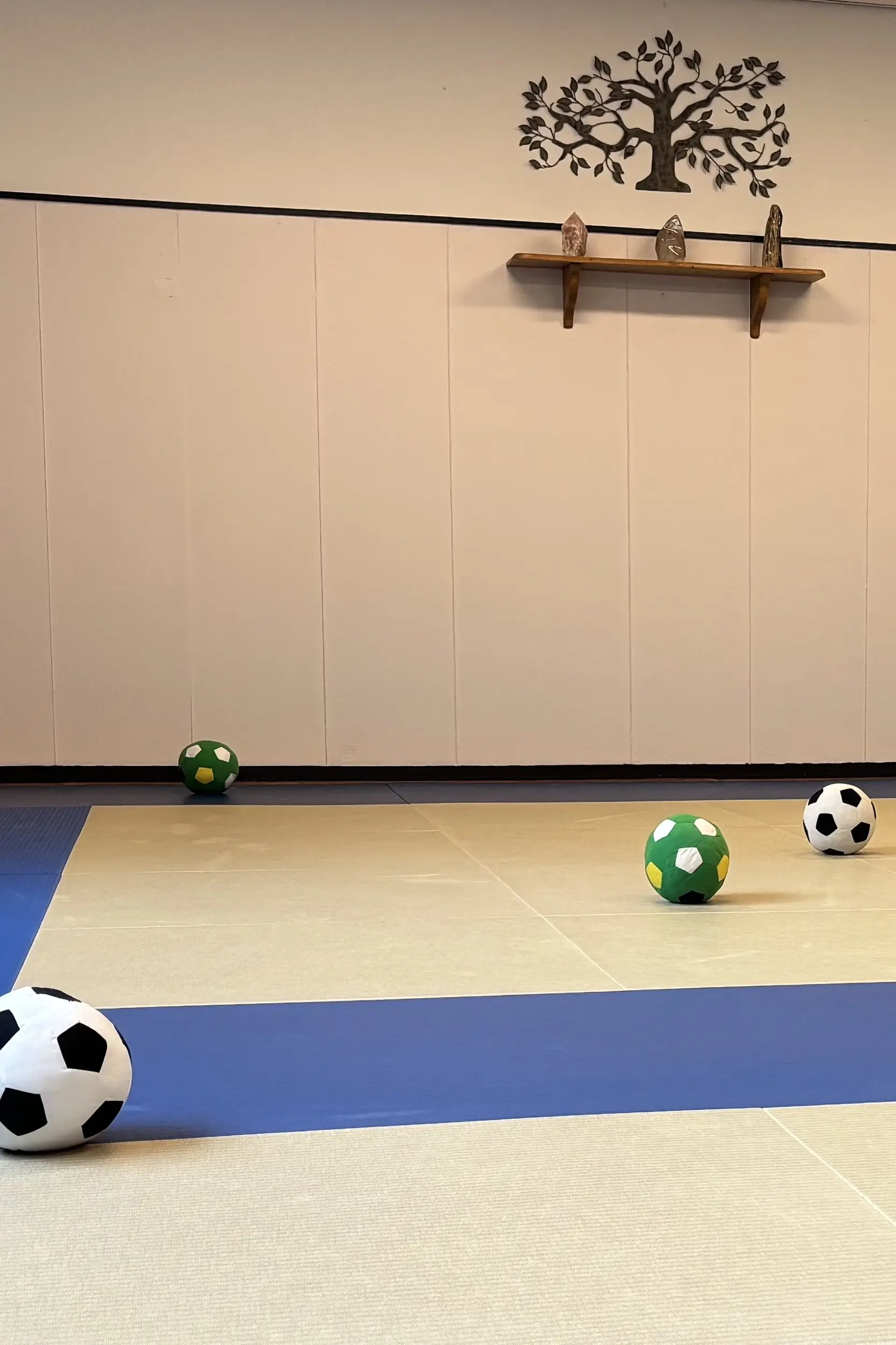
New to in-person embodiment coaching? Here’s what it is →

coping skills for kids – dojo for embodiment coaching

Meet your embodiment coach

Hi, I’m Karin

Welcome! There’s a lot I could say, but here’s what’s most important for now: I’m a parent, a former international school teacher, and now an embodiment coach. With my background in additional language acquisition, I know how to make this work accessible for international school families — including kids who barely speak English.

I’ve also trained in supporting children through the transitions of international school life (SPAN’s Laws of Transitions). Attachment issues and ADHD I know from the inside; from lived experience, as well as from my studies and ongoing self-study. Helping a child or adult feel at home in themselves, and watching them grow more confident, is what lights me up.

karin valk embodiment coach

What getting started looks like

A first conversation, if you’d like

This is optional. A relaxed talk if you have questions you want to ask before the actual intake. It’s body based coaching so words won’t get close to properly explaining it. That’s why I use the movement intake. But I’m here to answer questions.

The movement intake

This unique intake consists of two parts.
1. We get clear on the issue and the desired outcome.

2. We go through 5 easy, accessible movement exercises. One movement says more than a thousand words. Plus, you’ll get a good idea of what the sessions will be like which will help you decide if this is the right fit for your family.

A goal made for your child

By the end of the movement intake, it’s clear what your wish is for the coaching, and we shape that wish into a positive training goal to work toward.

Over the weeks and months, we will keep checking in to see if this goal still matches your family’s needs.
This program is tailored to you.

The Options

Coaching for international school families

3 – month plan

A focused start

€1500

Get started

6 – month plan

The deeper work

€2500

Get started

Every plan includes

  • A live in-person session every other week, in the dojo (Deventer or Amsterdam).
  • An optional 15-minute check-in (video)call on the weeks in between so we’re in touch every week.
  • Workbooks and printables to use at home, with new ones added as they’re ready.
  • Simple exercises you and your child can use for the rest of your life.
  • Guidance for you as a parent to support the work at home.
  • The 6-month plan is the best value overall.

The movement intake is included in both plans. On its own — like any single in-person session — it’s €300.
Not sure which fits? You don’t have to decide now. We’ll find the right plan together based on your intake.

Is embodiment coaching for kids right for your family?

This is for you if…

  • Your child is moving, arriving, or watching friends come and go. It’s showing in how they feel and behave.
  • Big feelings take over — anger, meltdowns, worry — or your child shuts down and won’t say what’s wrong.
  • Your child holds back, stays in the background, and struggles to feel at home in themselves.
  • You’ve tried talking it through, and it hasn’t reached what’s really going on.
  • There is tension in the family. Some things feel like a bigger struggle than you’d like, e.g. sleep issues, or not having clear rules and boundaries.

This is not for you if…

  • You’d rather hand your child over to be “fixed”, and not take part yourself. Embodiment coaching for kids works much more effectively when we take the family dynamic into account.
  • You want a quick fix or a single session. Like any real change, it takes time.
  • What your child needs right now is therapy or another kind of specialist care. I’ll always be honest about that, and point you toward the right help.
  • You’re after talk-only work. I work through the body and movement, so a willingness to feel and move is part of it.

FAQ: Questions Parents Ask

Call me biased, but I believe embodiment coaching for kids benefits everyone. Kids and adults. Especially, if your child is dealing with big emotions, shutting down, holding back, or finding their feet after a move, then building a strong connection to their body is very effective. Doubts? Let’s chat and see if it’s a fit.

It’s coaching. I’m a certified embodiment coach, not a psychologist or trauma therapist (although I am trauma-informed through both my certifications). The main difference is we work with what’s happening now — how you or your child meets everyday feelings and relationships — rather than digging into the past. If someone needs therapeutic care, I’ll suggest it.

Yes, and the two work well side by side. Therapy and coaching do different jobs, so many families do both. I’m always happy to work alongside what’s already helping. If you’d like to discuss your specific situation, feel free to reach out to me.

Play therapy is clinical treatment led by a therapist. This is embodiment coaching. We work with what your child feels right now, creating body awareness and revealing patterns through playful movement. This ripple effects into building real skills they can use day to day. And if I ever think your child needs a therapist, I’ll tell you.

It’s common. At home, your child feels safe enough to be fully themselves (great sign!); at school, being seen doesn’t feel safe yet, so they hold back. Embodiment coaching gives them a safe place to practice being seen, at their own pace, so that they can take that confidence anywhere they go.

Children from around five, all the way to adults.

Not at all. Because we work through the body, few words are needed. I have a background in additional language acquisition and years of experience making lessons accessible for multilingual children.

In addition, you’ll be joining us, and we can use home languages to make sense of you and your child’s experience. See the question “Can I be in the room?”, for a more elaborate explanation of why parents are encouraged to join sessions.

Start by not rushing them. A new school or country asks a lot of a child — new faces, new rules, a new language, and the friends they left behind — and their body needs to feel safe before any of it gets easier. That’s where we begin: through movement and simple exercises, your child builds a sense of home inside. This comes with them wherever they live next.

One concrete thing you can do before the move: as a former international school teacher, I’d teach your child a few phrases in the new language first: how to ask for the bathroom, how to say they don’t understand yet. Walking in already knowing a handful of words takes some of the fear out of day one. From there the new place feels less foreign, and friendships have room to grow. Comfort first, confidence after.

We start with a conversation with you and your child and get clear on the issue and the ideal outcome. Then we continue the intake through movement. If we feel good about working with each other, we can start the first session right away. We start with simple, playful movement, at their pace, and let them get comfortable. If your child feels nervous about coming, that’s normal, and you’re welcome to join in (this is always encouraged, regardless of the situation).

To get a better idea of what I do during in-person sessions, see this page.

No, not necessarily. It’s body-based, so very few words are needed. We unveil what’s going on without asking your child to explain it. Through movement, everything becomes visible. As my mentor, Gerbrand Martini, often says: one movement says more than a thousand words.

Yes. In fact, you’re a very important part of it. Working with a child on their own, the results aren’t as strong or lasting in comparison. This is because the family dynamic plays such a big role. For example, when a child is angry, often a parent is too. It comes from somewhere, and it lives in the whole family, rarely in the child alone (whether we’d like to admit it or not). That’s why this type of coaching is not ideal for parents who refuse to also take a look at themselves.

Working together, you and your child both start to see your own patterns and how they influence each other. You learn to look differently at what’s happening. In addition, you practice the exercises alongside your child, so you can keep them going at home. You’ll even catch when your child isn’t grounded, and know what helps.

Drop your child off to be “fixed”, and you miss all of that, and the whole weight of “getting better” falls on your child alone. This is family work. It’s effective, and it gets to be fun! See it as a unique opportunity to truly connect again.

It depends on your child and what’s going on. I work in plans over 3 or 6 months rather than one-off visits (bi-weekly sessions). Real, lasting change takes time. Obviously, the longer we work together the deeper we can go as there is always more to learn about ourselves. But we don’t need 50 years; it all depends on your family’s needs and desired outcome. And on how much time you’re willing and able to spend on the exercises outside of sessions. We will map it out together in the first conversation.

Let’s talk about it. We can often explore continuing online so your child doesn’t lose their support. It depends a little on their age and what works for them and your family.

Yes. I’m registered with the KvK (Chamber of Commerce), so you’ll receive a proper invoice for your records. If you have questions about VAT or other tax-related queries, feel free to reach out, and I’ll see what I can do.

Embodiment coaching for kids starts here

If this feels like a fit for your family, fill in the short form, and I’ll be in touch to plan your movement intake.
Let’s do this!
jongens in hun kracht coach
  • Contact
  • Privacy Policy
  • Cookie Policy

© 2026 Embodied World · Theme by 17th Avenue

Manage Consent
To provide the best experiences, we use technologies like cookies to store and/or access device information. Consenting to these technologies will allow us to process data such as browsing behavior or unique IDs on this site. Not consenting or withdrawing consent, may adversely affect certain features and functions.
Functional Always active
The technical storage or access is strictly necessary for the legitimate purpose of enabling the use of a specific service explicitly requested by the subscriber or user, or for the sole purpose of carrying out the transmission of a communication over an electronic communications network.
Preferences
The technical storage or access is necessary for the legitimate purpose of storing preferences that are not requested by the subscriber or user.
Statistics
The technical storage or access that is used exclusively for statistical purposes. The technical storage or access that is used exclusively for anonymous statistical purposes. Without a subpoena, voluntary compliance on the part of your Internet Service Provider, or additional records from a third party, information stored or retrieved for this purpose alone cannot usually be used to identify you.
Marketing
The technical storage or access is required to create user profiles to send advertising, or to track the user on a website or across several websites for similar marketing purposes.
  • Manage options
  • Manage services
  • Manage {vendor_count} vendors
  • Read more about these purposes
View preferences
  • {title}
  • {title}
  • {title}
Scroll to top
  • Coaching for kids
  • In-person coaching method
  • Contact